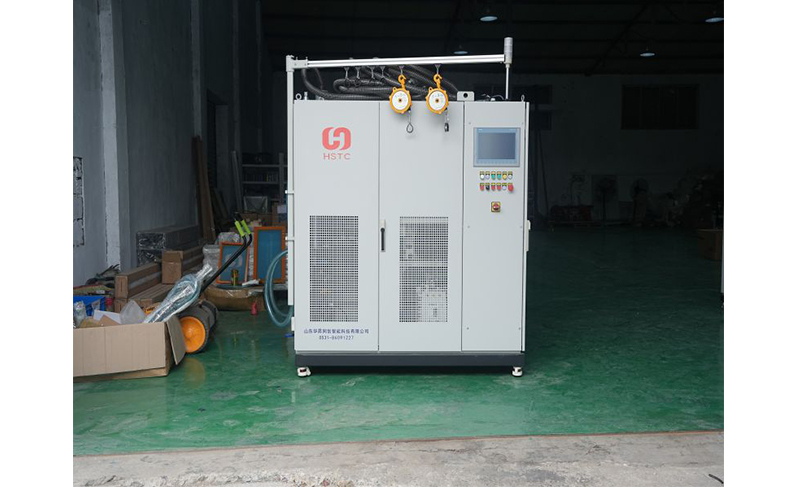
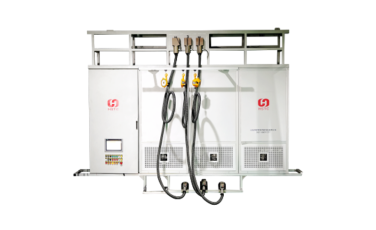
While both coolant and brake fluid filling machines belong to vacuum filling equipment with the core principle of "vacuum extraction to remove system air → liquid filling using pressure differential", their operational mechanisms differ significantly in detail due to structural characteristics, fluid properties, and performance requirements of the target systems (cooling system vs. brake system). The key differences are manifested in three aspects: vacuum parameters, filling logic, and anti-contamination design.
- Core objective: Remove air from the cooling system (tank, pipe, pump, engine water jacket, etc.) to avoid "air blockage" (air blocking coolant circulation and causing engine overheating).
- Vacuum requirements: Typically set between-0.08MPa and-0.095MPa (absolute pressure approximately 0.01-0.02MPa). The cooling system has a relatively large volume (generally 3-8L), with relatively thick and short pipes, and some models are designed with "exhaust ports" that allow air to be expelled without requiring extreme vacuum.
- Pressure Holding Logic: After achieving the target vacuum level, maintain pressure for 30-60 seconds while allowing slight vacuum drop (≤0.005 MPa). Since minor leaks in the cooling system (e.g., slightly loose joints) allow coolant to self-fill through circulation after refilling, this process poses minimal safety risks.
- Core objective: completely eliminate the air in the brake system (master brake cylinder, brake oil pipe, caliper/wheel cylinder) to avoid "air resistance failure" (air can be compressed, resulting in soft brake pedal, reduced braking force, directly affecting driving safety).
- Vacuum requirements: A higher vacuum level is required, typically set between-0.095MPa and-0.1MPa (approaching absolute vacuum). The brake system features narrow pipelines (5-8mm diameter), long paths (from the master cylinder to four-wheel calipers), and a closed-loop structure. Air tends to accumulate in bends or dead zones, necessitating a high-vacuum system to effectively "suck out" residual air.
- Pressure retention logic: The system must maintain pressure for an extended period (60-120 seconds) while maintaining a vacuum drop ≤0.002 MPa. If the vacuum level drops too rapidly during pressure retention, it directly indicates a system leak (e.g., poor sealing at oil pipe joints). The system must be shut down immediately for inspection. Otherwise, residual air will inevitably remain after refilling.
- Liquid characteristics: coolant (mainly ethylene glycol based) has low viscosity (about 5-10cSt at 20℃), good fluidity, and does not absorb moisture (not easy to deteriorate when in contact with air).
- Filling power: mainly depends on the pressure difference between the system and the storage tank (vacuum suction). In order to accelerate filling, some equipment will apply low pressure (0.1-0.2MPa) at the top of the storage tank to assist pushing. There is no need for precise pressure control (because the cooling system allows a small amount of excess filling, and the excess liquid can be overflowed through the expansion kettle).
- Refueling logic: Most of them are "quantitative refueling" (the volume is set according to the vehicle type, such as 5L). After refueling, no additional operation is required. The residual air in the system can be discharged by the circulation during engine operation (some models are designed with automatic exhaust valve).
- Liquid characteristics: brake fluid (DOT3/DOT4/DOT5.1) has a slightly higher viscosity (about 15-30cSt at 20℃), and is highly hygroscopic (it absorbs moisture in contact with air, resulting in lower boiling point, and easy to vaporize at high temperature).
- Refill Pressure Control: Precise pressure control (typically ≤0.1MPa) is essential to prevent brake line rupture caused by excessive pressure. Given the compact design (approximately 0.5-1.5L) and narrow piping of the braking system, gradual refilling is required to ensure complete liquid distribution in all areas. Rapid filling may lead to air entrapment.
- Filling logic: Most of them are "overflow filling" (filling until the brake fluid pot overflows to ensure that the system is completely filled), and after filling, they need to be combined with "stepping on the brake pedal" (manual or automatic equipment) to discharge the residual air caused by pipeline deformation (there is no automatic exhaust valve in the brake system, so active exhaust is required).
- Because the coolant is not easy to deteriorate, only basic filtration (filter precision 20-50μm) is required to prevent impurities from entering the cooling system and blocking the water channel.
- The storage tank does not need to be strictly sealed (with breathing hole), and the contact with air during filling has little effect.
- Because the brake fluid is highly hygroscopic, it must be isolated from air throughout the whole process: the storage tank adopts a sealed design (with a one-way intake valve, only allowing liquid outflow to supplement inert gas), and the filling pipeline joint is a "leak-proof quick plug structure" (automatic sealing when disconnected to avoid air entry).
- Higher filtration accuracy (≤10μm) to prevent impurities from blocking the brake piston (the diameter of the brake pipeline is very small, and impurities are easy to cause jamming).
In short, brake fluid filling machines have more stringent requirements on vacuum, sealing and filling accuracy due to the "absolute safety priority" of brake system and the "hygroscopicity" of brake fluid; while coolant filling machines focus more on "efficient filling" and have higher tolerance for details.